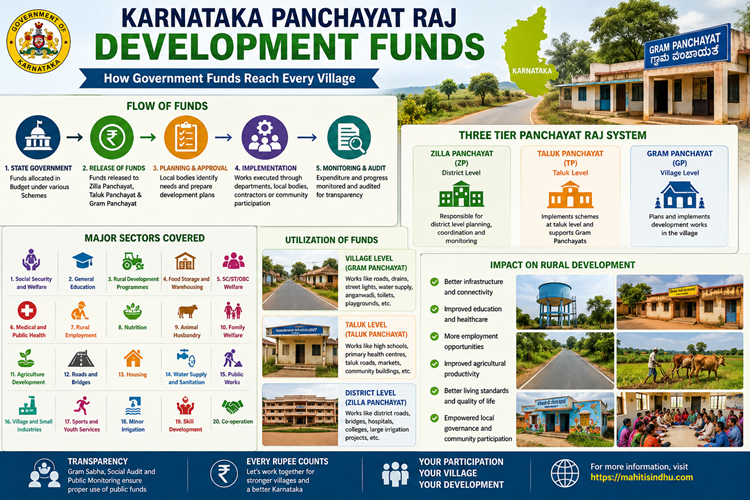
Karnataka Panchayat Raj Fund Allocation and Utilization System: How Development Funds Reach Villages
Every year, the Government of Karnataka allocates thousands of crores of rupees to local self-governments for the development of rural areas. These funds are distributed through a three-tier Panchayat Raj system to ensure that development activities reach every village, taluk, and district across the state.
What is the Panchayat Raj System?
The Panchayat Raj system is a decentralized governance structure that empowers local bodies to plan and implement development activities based on local needs.
The three levels of Panchayat Raj Institutions (PRIs) are:
- Gram Panchayat (GP) – Village Level
- Taluk Panchayat (TP) – Taluk Level
- Zilla Panchayat (ZP) – District Level
These institutions play a vital role in delivering public services, creating infrastructure, and implementing welfare schemes.
How Funds Flow from Government to Villages
Development funds are released by the State Government under various schemes and budget heads.
Step 1: Budget Allocation
The Government allocates funds under different departments and schemes during the annual budget.
Step 2: Release of Funds
Funds are released to:
- Zilla Panchayats
- Taluk Panchayats
- Gram Panchayats
depending on the nature of the scheme.
Step 3: Planning and Approval
Local bodies identify development needs and prepare action plans.
Step 4: Implementation
Approved works are executed through departments, local bodies, contractors, or community participation.
Step 5: Monitoring and Audit
The expenditure and progress of works are monitored by government authorities and audited to ensure transparency.
Major Sectors Benefiting from Panchayat Raj Funds
1. Education
- School infrastructure
- Classroom construction
- Drinking water facilities
- Toilets and sanitation
- Digital learning initiatives
2. Health and Public Welfare
- Primary Health Centres
- Health camps
- Maternal and child welfare programmes
- Disease prevention initiatives
3. Drinking Water and Sanitation
- Borewells
- Water supply pipelines
- Overhead tanks
- Waste management systems
4. Roads and Rural Connectivity
- Village roads
- Internal roads
- Culverts and bridges
- Road maintenance works
5. Social Welfare
- SC/ST welfare programmes
- Assistance to vulnerable families
- Community development initiatives
6. Agriculture and Irrigation
- Farm support programmes
- Minor irrigation works
- Water conservation projects
- Agricultural infrastructure
7. Employment and Skill Development
- Rural employment generation
- Skill training programmes
- Self-employment initiatives
8. Housing and Basic Infrastructure
- Housing assistance
- Street lights
- Community halls
- Public utility buildings
Why Proper Utilization of Funds Matters
When development funds are effectively utilized:
✅ Better roads improve connectivity.
✅ Safe drinking water reaches households.
✅ Schools and health centres receive necessary infrastructure.
✅ Employment opportunities increase.
✅ Agricultural productivity improves.
✅ Rural living standards improve.
Proper utilization also ensures that public money directly benefits citizens and contributes to sustainable development.
Challenges in Fund Utilization
Despite significant allocations, local bodies often face challenges such as:
- Delays in fund release
- Shortage of technical staff
- Delays in project execution
- Incomplete utilization of allocated funds
- Monitoring and reporting issues
Addressing these challenges can significantly improve the effectiveness of development programmes.
The Importance of Transparency
Citizens can play an important role by monitoring local development works and participating in Gram Sabha meetings.
Transparency in:
- Fund allocation
- Work execution
- Expenditure reporting
- Beneficiary selection
helps strengthen local governance and accountability.
Conclusion
The Panchayat Raj system is the backbone of rural development in Karnataka. Through Gram Panchayats, Taluk Panchayats, and Zilla Panchayats, government funds are transformed into roads, schools, drinking water facilities, welfare programmes, healthcare services, and livelihood opportunities for millions of people.
Effective planning, transparent implementation, and active citizen participation are essential to ensure that every rupee allocated for development creates a meaningful impact on the lives of rural communities.
Keywords: Karnataka Panchayat Raj, Gram Panchayat Funds, Taluk Panchayat Budget, Zilla Panchayat Development, Rural Development Karnataka, Panchayat Raj Institutions, Karnataka Government Funds, GP TP ZP Funds, Rural Infrastructure Development, Local Governance Karnataka.