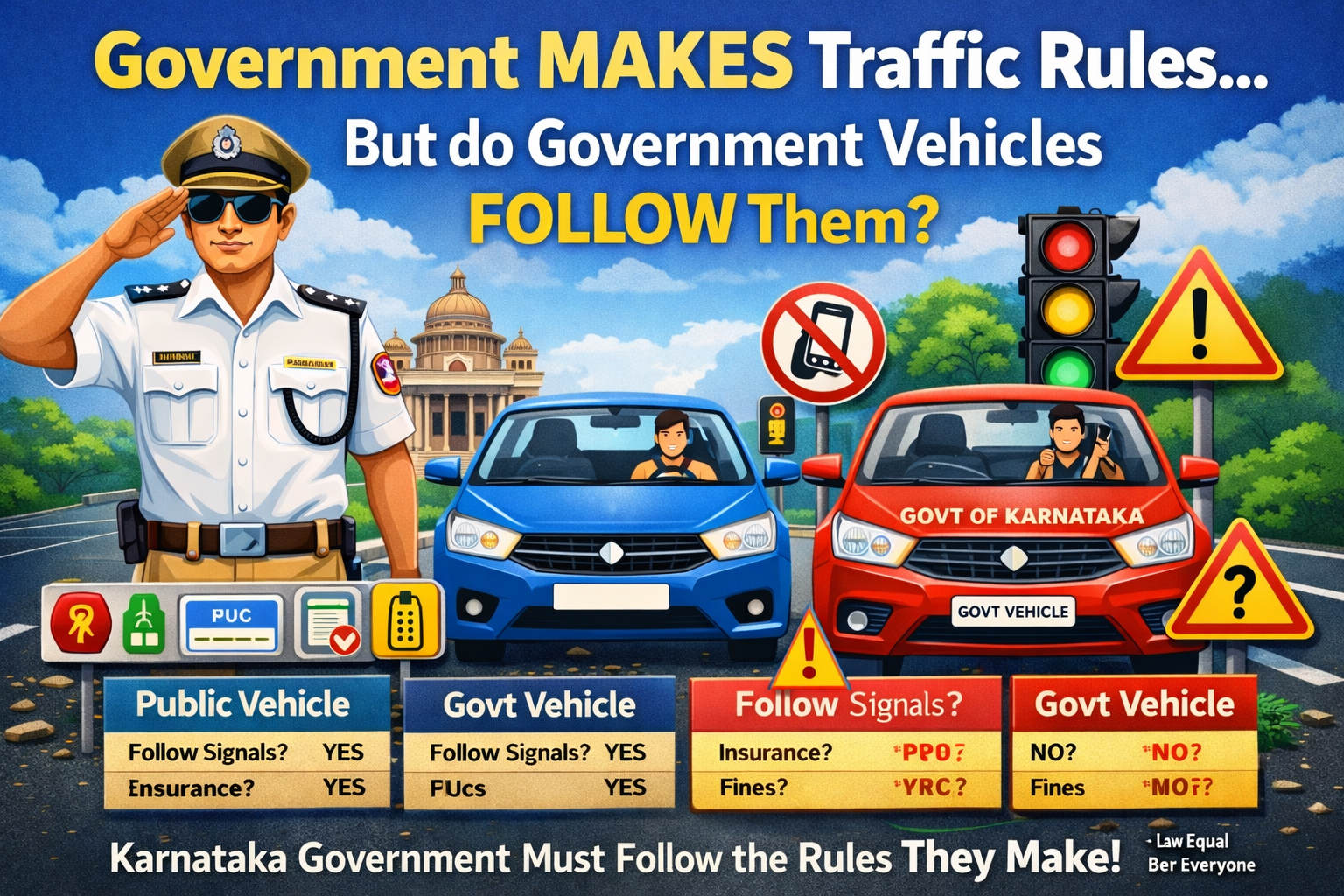
🚗 Are Traffic Rules Equal for Government Vehicles?
A Question on Accountability & Law
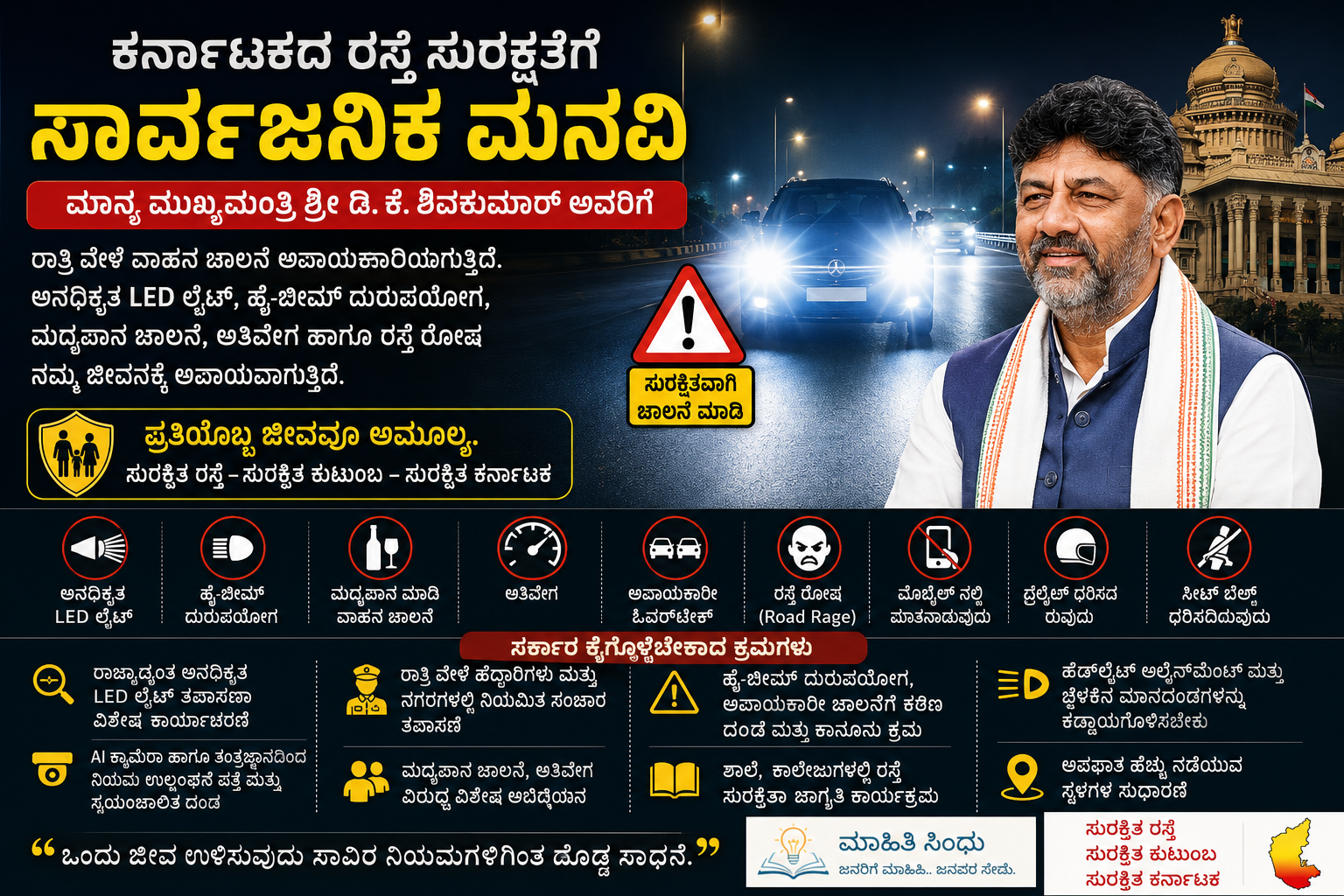
In Karnataka, traffic rules are created by the government to ensure road safety and discipline on roads.
But a serious question arises:
👉 If rules are made by the government… shouldn’t government vehicles follow them without fail?
---
⚖️ Law is Equal for Everyone:
As per the :contentReference[oaicite:0]{index=0}:
👉 Traffic rules apply equally to:
• Public vehicles
• Private vehicles
• Government vehicles
There is no general exemption for normal government vehicles.
---
📄 What Rules Say:
Every vehicle on the road must:
• Follow traffic signals 🚦
• Maintain lane discipline
• Carry valid documents (RC, Insurance, PUC)
• Follow speed limits and parking rules
👉 These rules are mandatory, not optional.
---
❓ Then Why This Difference?
On roads, people often observe:
• Government vehicles not following lane discipline
• Ignoring traffic signals
• Lack of visible compliance with documents
👉 This raises a key public concern:
Are rules only for the public?
---
🧾 Accountability Matters:
:contentReference[oaicite:1]{index=1} has the authority to enforce rules on all vehicles.
👉 Then why should there be any difference in enforcement?
If the system is strong:
• Rules must be applied equally
• Violations must be treated equally
---
💬 Public Question:
👉 “If citizens are fined for violations… shouldn’t the same apply to government vehicles?”
---
✔️ What Should Ideally Happen:
• Government vehicles must strictly follow all traffic rules
• No misuse of authority
• Equal enforcement for all
• Transparency in action
---
📢 Message for Better Governance:
“Rules gain respect only when they are followed by those who create them.”
---
📌 Conclusion:
In Karnataka, traffic rules are meant for everyone. When rules are followed equally, public trust increases and roads become safer.
👉 Law should not only exist — it should be seen in action.